The biggest drawback of GenAI language models is that they do not really understand the output. A large language model generates text by predicting words on the basis of statistical weights that it got from the training set. That's why LLMs are of little help when creating, say, medical documents: the results will be misleading and inconsistent.
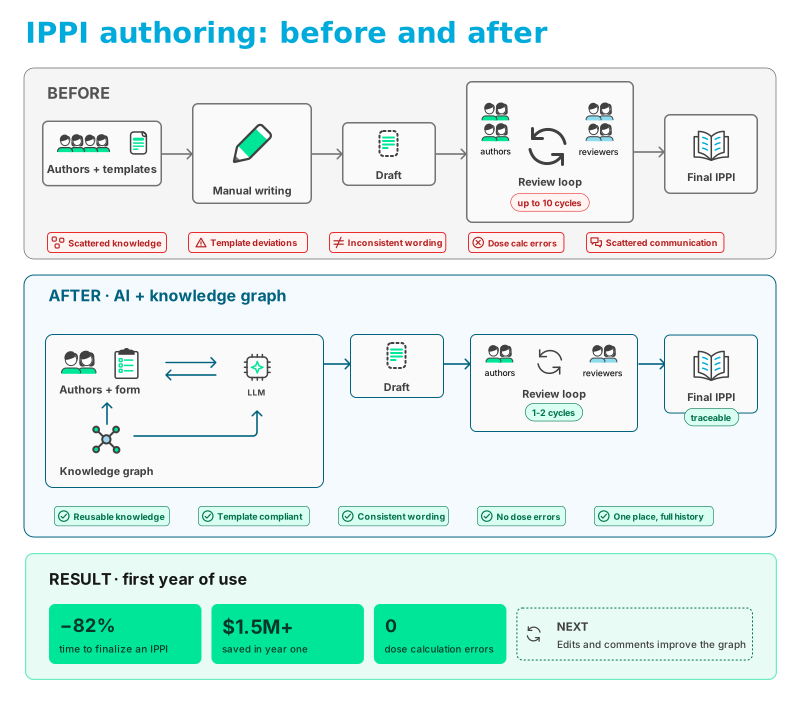
Still, we can help this: we can use knowledge graphs as a representation of human understanding and a structured storage of reusable organizational knowledge. We can add instructions for the LLM into the nodes of the graph and enable intelligent reasoning across interconnected data elements.
In our recent case, we created a set of taxonomies and an enterprise knowledge graph in order to streamline the generation of clinical research documents. The solution reduced the worktime needed to develop documents by 82% and saved $1.5+ million during the first year of usage. Simultaneously, we improved the quality and reduced health risks for study participants.
More about the case: AI-Powered Knowledge-Graph-Driven Document Generation.
Do you need to codify the organizational knowledge so that it can be used to automate business processes and bring business value? to discuss how we can help.